Naming


Entrepreneur John spent three months searching for a name for his startup. He was launching a healthy food delivery service and wanted a name that conveyed freshness, care for well-being, and speed. The list of options kept growing: GreenFuel, FreshBox, Vitamin Courier, Daily Greens. Each one seemed reasonable, but none felt right.
A friend suggested checking domain availability. It turned out that all the options were either already taken or priced far beyond budget. A search in the USPTO database made things worse: several names were already registered as trademarks by competitors.
That’s when John realized that coming up with a nice-sounding name is only half the job. A strong name must be legally available, easy to pronounce, memorable, and accessible as a domain. He turned to naming specialists. Two weeks later, a new name was born: “Yours.” Short, clear, and emotionally resonant. The domain was available, and the trademark registration went through without issues.
A year later, the brand Yours was recognized without explanation. The name became an asset that worked for awareness and trust.
What Is Naming
Naming is the process of creating a name for a company, product, or service. It’s not just about inventing a catchy word. It’s a strategic discipline that takes into account positioning, target audience, legal constraints, and long-term brand goals.
A name is the first and most important brand asset. It appears before the logo, before the website, before any communication. First impressions, memorability, and associations all start with the name.
A good name performs several functions at once. It reflects the essence of the business or creates the right associations. It’s easy to pronounce and remember. It’s distinctive enough to be legally protected. And it works across contexts — on a storefront, in advertising, and in everyday conversation.
Naming is a balance between creativity and pragmatism. A name must resonate not only with the founder but also with the audience. It must be not only attractive but also registrable.
Criteria for a Strong Brand Name
Not every word can become a brand name. There are key criteria used to evaluate naming quality.
Distinctiveness
A name must stand out from competitors. If there are already ten similar names in your category, yours will get lost. Distinctiveness drives recognition.
Distinctiveness is also critical from a legal standpoint. If a name is too similar to an existing trademark, it won’t be registered — or worse, you may be forced to rebrand after launch.
Pronounceability
A name should be easy to say. If people stumble over pronunciation, they’ll avoid mentioning it. Word of mouth won’t work.
Pronounceability is tested across languages. Even if you operate only in the U.S., the name shouldn’t sound awkward or inappropriate in other major languages. Global expansion can happen faster than expected.
Memorability
An ideal name sticks after the first exposure. Short names are easier to remember. Unusual or vivid words also attract attention.
A simple test: a person hears the name once, doesn’t think about it for a week — can they recall it later? If yes, the name works.
Associations
A name can directly describe the product or evoke indirect associations. “Whole Foods” is descriptive. “Google” references scale and search.
Positive associations reinforce positioning. Negative ones undermine the brand. It’s essential to understand what mental images the name creates.
Scalability
A name should grow with the business. If you start as a pizza delivery service called “Pizza Express,” adding sushi or burgers later becomes difficult.
More universal names provide flexibility. Amazon started with books, but the name never limited expansion.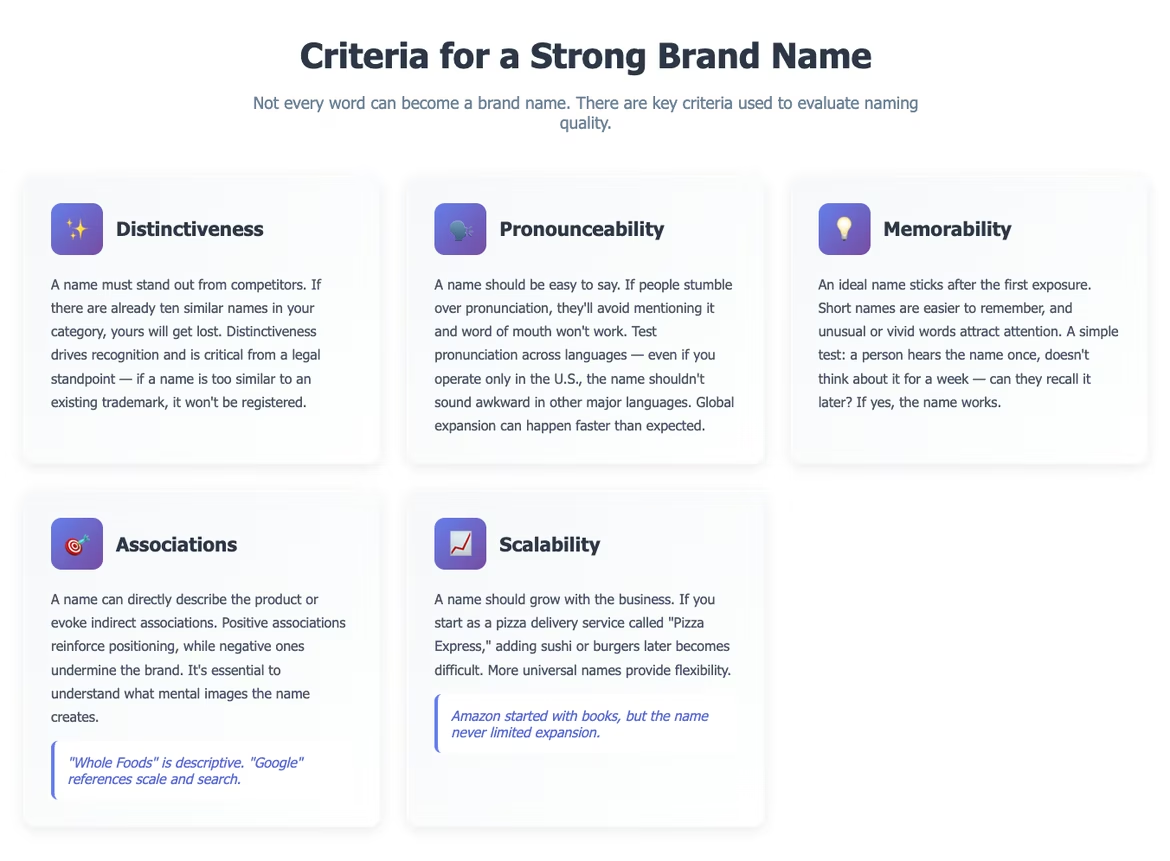
Naming Strategies
Different approaches work for different businesses and goals.
Descriptive Names
Descriptive names directly state what the company does. “Bank of America” or “General Motors” are clear examples.
The advantage is clarity. Customers immediately understand the offering. The downside is low distinctiveness and legal vulnerability. Descriptive terms are often difficult or impossible to trademark.
This approach works in conservative industries where clarity matters: banking, insurance, logistics.
Metaphorical and Associative Names
Metaphorical names don’t describe the product directly but evoke the right ideas. “Apple” suggests simplicity and approachability rather than technology.
These names are expressive, memorable, and easier to register. However, they require more marketing investment to explain the connection between name and product.
Metaphors work well in creative and innovative industries: tech, retail, entertainment.
Neologisms
A neologism is a made-up word with no dictionary meaning. Google, Zillow, Spotify — all are neologisms.
Pros: uniqueness, easy trademark registration, freedom of meaning. Cons: higher cost of education and promotion.
Neologisms suit brands ready to invest in building awareness from scratch.
Founder Names
Using the founder’s last name as the brand. Ford, Dell, McAfee.
The advantage is authenticity and trust. Customers know there’s a real person behind the brand. The risk is reputational: if the founder’s image suffers, so does the brand.
Founder names work well in premium segments, consulting, and expert-driven businesses.
Acronyms
Names formed from initial letters: IBM, CNN, UPS.
Pros: brevity and corporate tone. Cons: lack of emotion and difficulty for new brands.
Acronyms suit large organizations with long official names. For startups, they’re a risky choice.
Compound Names
A combination of two words or roots: Facebook, DoorDash, YouTube.
This approach balances clarity and originality. The name is understandable yet distinctive.
Compound names are common in retail, food services, and digital platforms.
The Naming Process
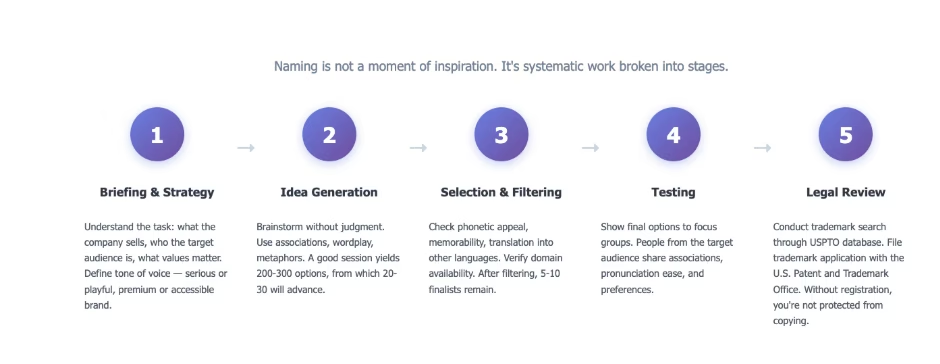
Brief and Strategy
First, define the problem. What does the company sell? Who is the audience? What values matter? Who are the competitors? What is the positioning?
These answers define the boundaries of naming. The name must reflect brand strategy, not the founder’s personal taste.
At this stage, tone of voice is defined: serious or playful, premium or accessible, traditional or innovative. These parameters shape the type of name.
Idea Generation
Brainstorming begins. The team generates hundreds of options without judging them.
Techniques include associations, wordplay, root combinations, foreign words, and metaphors. Quantity matters. A strong session produces 200–300 options, from which 20–30 move forward.
Screening and Filtering
Now critical evaluation starts. Each name is checked for sound, memorability, and alignment with positioning.
Meanings and connotations in other languages are reviewed. The name must not sound offensive or ridiculous.
Domain availability is checked. If the domain is taken or prohibitively expensive, the option is discarded.
After filtering, 5–10 finalists remain.
Testing
Finalists are tested with focus groups from the target audience. Participants share associations, ease of pronunciation, and overall perception.
Testing reveals hidden issues. Sometimes a name that seems perfect internally triggers negative reactions externally.
Legal Clearance
Before final selection, a trademark search is conducted. In the U.S., this means checking the USPTO database to see whether similar marks are registered within relevant Nice Classification classes.
If the name is clear, a trademark application is filed. The process takes months but is essential.
Without registration, the brand is vulnerable. A competitor can copy or even register the name before you.
Naming and Logo Design
A name and visual identity must work together.
Wordmarks
When a logo consists only of text, typography and composition are critical. Google, Uber, Netflix all rely on wordmarks.
Here, the name carries the full visual load. It must be short, legible, and effective at different sizes.
Symbol + Name
Some logos combine a symbol with text, like Nike or Starbucks.
This approach offers flexibility. Over time, audiences may recognize the brand even without the name.
How the Name Influences Design
Long names often require horizontal layouts. Short names allow compact or square compositions.
The meaning of the name affects style. “Whole Foods” uses organic, soft forms. “Intel” feels precise and technological.
Designers and naming specialists must collaborate to create a coherent identity.
Legal Protection of a Name
Creating a name is only half the work. It must be protected.
Trademark
A trademark is a legally registered designation protected by law. Only the trademark owner can use it in a specific category.
In the U.S., registration is handled by the USPTO. The process includes application, examination, and approval.
Trademarks are registered by Nice Classification classes. Registering a name for food does not prevent someone else from registering the same name for software.
Clearance Searches
Before filing, a clearance search is mandatory. Similarity is evaluated not only by exact matches but also by likelihood of confusion.
Names that sound or look too similar to existing marks may be rejected.
Domain Names
Alongside trademarks, a domain is essential. Ideally, the brand name matches the domain.
Common checks include .com and relevant alternatives. If the domain is taken but unused, it may be purchased — often at a high cost.
Adding prefixes or changing extensions reduces memorability.
International Registration
For global expansion, international trademark protection is required. The Madrid System allows filing in multiple countries through a single application.
It’s more expensive, but without it, competitors may register your name abroad and block market entry.
The Role of AI in Naming
Artificial intelligence is transforming naming workflows. AI doesn’t replace humans, but it accelerates and expands the process.
Generating Thousands of Options
AI can generate hundreds of names in minutes based on length, style, and keywords.
Quality varies, but strong ideas often emerge. This saves time during brainstorming.
Language and Association Checks
AI analyzes how a name sounds across languages and flags negative or inappropriate meanings.
Previously, this required native speakers. Now it’s instant.
Domain Availability Analysis
AI checks domain availability automatically and suggests alternatives when the primary domain is taken.
This speeds up filtering.
Pronounceability Scoring
AI evaluates phonetics, rhythm, and sound combinations to predict ease of pronunciation.
It doesn’t replace human testing but works as an initial filter.
Common Naming Mistakes
Naming is complex, and mistakes can be costly.
Skipping Legal Checks
The most dangerous mistake. Companies launch, invest in marketing, and then receive a trademark infringement claim.
Rebranding means lost recognition and financial damage. Always clear and register the name before launch.
Overly Complex Names
If customers can’t pronounce or spell the name, they won’t use it. Word of mouth fails.
Test names on real people. If they hesitate, simplify.
Names That Are Too Narrow
Names that describe a single product limit growth.
Think five to ten years ahead. Will the name still fit?
Chasing Trends
Trendy suffixes fade quickly. Names built on fashion age fast.
Aim for longevity, not hype.
Personal Taste Over Strategy
Founders often choose names they like, not names the audience understands.
Audience feedback matters more than personal preference.
Conclusion
Three years after launch, Yours became a leading player in the healthy food market. The name worked on every level. It was short and memorable. It created the right associations: personal, natural, trustworthy. It was legally clear and protected.
John often recalls those three months of searching and admits: if he had chosen the first acceptable option, the business wouldn’t have grown as fast. A name is the foundation of a brand. You can’t build an empire on unstable ground.
Naming isn’t a one-off task or something to solve in an evening. It’s strategic work that requires time, expertise, and testing. A good name is an asset that works for decades. A bad one is a problem that follows the brand at every stage of growth.
In a world where attention is the most valuable currency, a brand name determines whether you’re noticed or ignored. Investing in strong naming pays off many times over. A name that is remembered and protected becomes part of culture and language.
 Mascot
  Branding
  Golden Ratio